
Oil is the price the whole economy watches, so it is natural to ask whether a move in crude shows up in crypto. The short answer is yes, but only indirectly, and the link is far weaker and less reliable than most headlines suggest. Oil does not push Bitcoin around on its own. Instead, a large oil swing changes inflation, interest rates, risk appetite, the dollar and even miner margins, and crypto reacts to those. This guide walks through how an oil move actually reaches crypto, and why the connection keeps flipping.
Not financial advice. This is general education, not a recommendation to buy, sell or trade anything based on the oil price. Crypto is volatile, the oil link is unstable, and you can lose money. Read our risk disclaimer and do your own research first.
Key takeaways
- Oil does not move crypto directly. It works through inflation, rates, risk appetite, the dollar and miner costs.
- Rising oil can be bullish or bearish for crypto, depending on whether the market focuses on the inflation hedge story or the higher-rates story.
- Falling oil can help crypto by cooling inflation, or hurt it if the drop signals a growth scare.
- The oil and Bitcoin correlation is unstable and can change sign, so any single number is a snapshot, not a rule.
- Treat oil as one macro input among many, not a trading signal on its own.
The short answer
There is no fixed, dependable relationship between oil and crypto. Over some stretches they drift the same way, over others they move apart, and the measured correlation can flip from positive to negative within a year. That is because oil and Bitcoin are not really reacting to each other. They are both reacting to bigger forces: the growth outlook, inflation, central bank policy and the dollar. When you see oil and crypto move together, it usually means a common driver is steering both, not that one is steering the other.
How an oil move reaches crypto
A change in the oil price spreads into crypto through a handful of channels. Each one can be strong or weak depending on the moment, and they do not always point the same way.
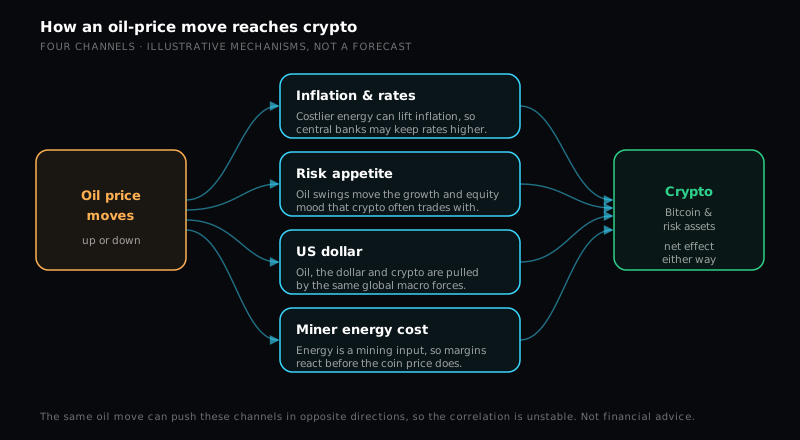
Inflation and interest rates
This is the loudest channel. Oil feeds into the price of almost everything, from shipping to plastics to food, so a sustained rise in crude tends to lift inflation. Higher inflation pushes central banks to keep interest rates higher for longer, and higher rates pull money out of risk assets. Crypto, which has no yield of its own, often trades like a long-duration risk asset, so a rates-driven sell-off can drag it down even while oil is climbing.
Risk appetite
Oil is a barometer of global growth. A steady, demand-led rise in oil can go hand in hand with an optimistic, risk-on mood, the same mood that lifts stocks and crypto. A disorderly spike, or a collapse that signals recession, does the opposite and sours risk appetite. Crypto tends to move with that broad appetite for risk, so it often follows the mood that oil helps set rather than oil itself.
The US dollar
Oil is priced in dollars, and the dollar is the hinge of global macro. A stronger dollar often weighs on both oil and crypto, while a weaker dollar can lift both. This shared sensitivity is one reason oil and Bitcoin sometimes look connected when they are really just dancing to the same currency.
Miner energy costs
Energy is a real input for Bitcoin miners, so it is tempting to draw a straight line from oil to mining to price. In practice the line is faint. Most miners run on electricity from grids, hydro and other renewables, not crude oil, and the coin price is set by supply and demand in the market, not by a miner’s electricity bill. When energy costs jump, miner margins feel it first, which can affect how much miners sell, but it is a second-order effect, not a price lever.
Why the oil-crypto link keeps flipping
Here is the part that trips people up. The same oil move can support two opposite conclusions, and the market can switch between them quickly.
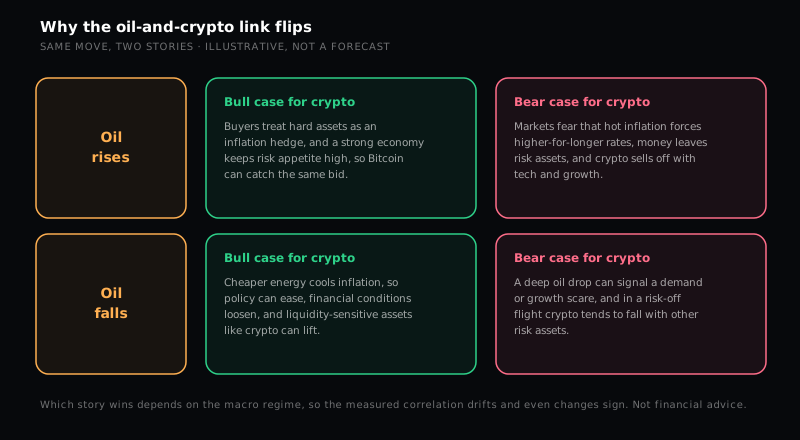
When oil rises, the bullish reading is that hard assets are in demand as an inflation hedge and the economy is strong, which can lift Bitcoin too. The bearish reading is that hot inflation forces higher rates, and risk assets including crypto get sold. When oil falls, the bullish reading is that inflation cools and policy can ease, helping liquidity-sensitive assets. The bearish reading is that the drop is a demand scare, and crypto sells off with everything else in a flight to safety.
Because the market can hold either view depending on the regime, the correlation you measure today may not hold next quarter. This is why historical episodes look contradictory. In some inflation-driven periods oil and Bitcoin fell together as rates rose, and in others they rose together on a risk-on wave. Neither is the permanent rule.
What this means in practice
For most people, the practical takeaway is restraint. Oil is worth watching as one input into the macro backdrop that crypto lives in, alongside inflation prints, rate decisions and the dollar. It is not a trigger to buy or sell crypto on its own. If a sharp oil move is happening, the useful question is not what does the oil chart say, but what is it doing to inflation expectations, rate expectations and the overall risk mood, because those are the things crypto actually trades on. For a wider read on what moves the market, see why Bitcoin is down today and our Bitcoin price outlook for H2 2026.
How to use this without overtrading
Reacting to every oil headline is a fast way to churn an account. A calmer approach is to keep position sizes small, decide your plan before the news rather than during it, and treat oil as context, not a signal. If you do want crypto exposure, you can trade on BingX with a stablecoin, and you can also get gold exposure there through tokenized gold, which some traders use as a hedge when they are worried about inflation and macro stress. For ideas on building a watchlist rather than chasing headlines, see the best crypto to buy in June 2026.
Bottom line
Oil affects crypto, but quietly and inconsistently. It works through inflation, rates, risk appetite, the dollar and miner margins, and the net effect can point up or down depending on which channel the market is focused on. The oil and Bitcoin correlation is real at times, but it is unstable enough that you should never treat it as a rule. Watch oil as part of the macro picture, not as a trading signal, keep your sizing sensible, and make decisions on the wider backdrop rather than a single chart.
This article is general information, not financial advice. Crypto is volatile and the link to oil is unstable, so do not trade on it blindly. Read our risk disclaimer, do your own research, and never invest money you cannot afford to lose.
Frequently asked questions
Does the oil price affect crypto?
Indirectly, yes. Oil does not move Bitcoin directly, but a big oil swing changes inflation, interest rates, risk appetite, the dollar and even miner margins, and crypto reacts to those. The effect is real but inconsistent, because the same oil move can push those channels in opposite directions.
Does oil going up make Bitcoin go up or down?
It can do either. Rising oil can support a bull case, where buyers treat hard assets as an inflation hedge while growth stays strong, or a bear case, where markets fear higher-for-longer rates and sell risk assets including crypto. Which story wins depends on the macro regime at the time.
What happens to crypto when oil prices fall?
Falling oil can cool inflation and let policy ease, which tends to help liquidity-sensitive assets like crypto. But a sharp drop can also signal a growth scare, and in a risk-off flight crypto often falls with other risk assets. There is no fixed rule, so check the wider macro picture.
Is there a strong correlation between oil and Bitcoin?
Not a stable one. The measured correlation drifts over time and can even change sign, because oil and Bitcoin are both driven by broader forces like growth, inflation and the dollar rather than by each other. Treat any single correlation number as a snapshot, not a rule.
How do oil prices affect Bitcoin mining?
Energy is a core mining cost, but most miners run on electricity from grids and renewables, not crude oil directly. Oil matters mainly as part of the wider energy and inflation picture. When energy costs rise, miner margins feel it first, and the coin price reacts to supply and demand, not to a miner's bill.
Should I trade crypto based on the oil price?
Be careful. Oil is one of many macro inputs, and the link to crypto is weak and unstable, so trading crypto purely off the oil chart is risky. Most people are better served by understanding the channels than by reacting to every oil headline. This is education, not financial advice.
Where can I trade crypto if I want exposure?
You can trade major coins on a mainstream exchange such as BingX, funded with a stablecoin, and you can also get gold exposure there through tokenized gold. Always size positions small, use risk controls, and never trade money you cannot afford to lose. Check live products and fees before you start.
#Bitcoin#oil#macro#correlation#crypto#2026
Discussion
Loading comments…