
Gold has been the classic store of value for centuries, and tokenized gold tries to bring that onto crypto rails. Instead of buying a coin or a bar and storing it, you buy a token that is meant to track one ounce of real, vaulted gold, and you can trade it from a normal crypto account, often 24/7 and in small fractions. This guide explains what tokenized gold actually is, how the two main tokens, PAXG and XAUT, compare, where to trade them, and the risks to weigh before you buy.
Not financial advice. This is general education, not a recommendation to buy gold, PAXG, XAUT or any token. Gold and crypto both carry risk, prices move, and you can lose money. Read our risk disclaimer and do your own research first.
Key takeaways
- Tokenized gold is a token where one unit is meant to track one fine troy ounce of vaulted, LBMA-certified gold.
- PAXG is issued by Paxos under New York oversight. XAUT is issued by Tether under a more offshore model. Both aim to track one ounce.
- You can trade PAXG and XAUT on BingX, and PAXG on KuCoin, funded with a stablecoin.
- You hold a token and a claim on the issuer, not an allocated bar in your name, so issuer and custody risk matter.
- It does not pay interest, it can trade at a small premium or discount, and the gold price itself can fall.
What tokenized gold is
Tokenized gold is a digital token whose value is tied to physical gold. With the leading tokens, the issuer holds LBMA-certified gold bars in a professional vault and mints tokens against them, so that one token is designed to represent one fine troy ounce. You can then buy, sell or transfer the token on crypto rails, the same way you would handle a stablecoin, while the metal stays in the vault.
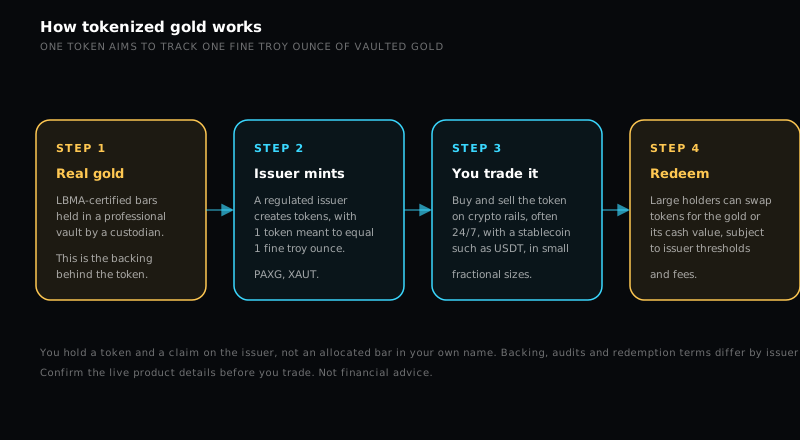
The appeal is convenience. You get gold-linked exposure without finding a dealer, paying for storage and insurance, or worrying about how to sell a physical bar later. You can buy a fraction of an ounce, trade it at any hour, and move it quickly. The trade-off is that you are trusting an issuer and a custodian, and you hold a token and a claim, not a specific bar with your name on it.
PAXG vs XAUT
There are two tokens that dominate tokenized gold, and they take different approaches to the same idea.
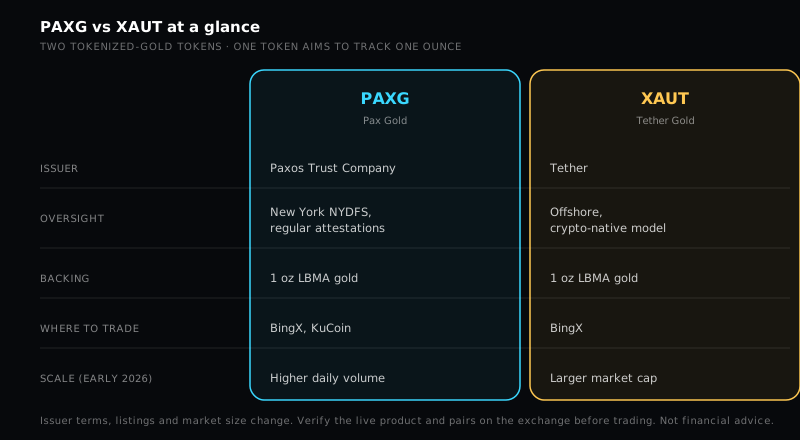
PAXG (Pax Gold) is issued by Paxos Trust Company, a regulated trust under New York NYDFS oversight, with regular third-party attestations of its gold reserves. Each PAXG is meant to represent one fine troy ounce of a London Good Delivery bar. It is widely listed and trades on both BingX and KuCoin.
XAUT (Tether Gold) is issued by Tether, the company behind the USDT stablecoin, under a more offshore, crypto-native model that emphasizes liquidity and broad exchange integration. Like PAXG, each XAUT is meant to track one fine troy ounce of LBMA gold. It trades on BingX, among other venues.
As of early 2026, XAUT carried the larger market cap while PAXG saw the higher daily spot trading volume, but those figures change, so check current data before you choose. For most users the practical questions are simpler: which token is listed where you want to trade, which has the liquidity you need, and whose issuer model you are comfortable with.
Where to trade tokenized gold
You trade tokenized gold the same way you trade any spot pair: fund with a stablecoin, open the market, and place an order.
- BingX lists XAUT/USDT and PAXG/USDT on spot, plus gold futures for traders who want leverage. If you want a step-by-step walkthrough, see how to buy tokenized gold on BingX, and you can trade on BingX directly. BingX is also where the wider tokenized lineup lives, including tokenized stocks.
- KuCoin lists PAXG against USDT and BTC, so it is a solid alternative if you specifically want Pax Gold. You can open a KuCoin account and trade the PAXG/USDT spot pair.
Fees matter on any of these. You pay the exchange’s spot trading fee, around 0.10 percent at the standard tier on BingX, plus any network fee when you move tokens on-chain. We break the numbers down in BingX vs Bybit vs KuCoin fees. Funding is in a stablecoin, so if you are new to those, read is USDT safe first.
The risks
Tokenized gold is convenient, but it is not a free lunch.
- Issuer and custody risk. Your token is a claim on the issuer. If the issuer or custodian fails or mismanages reserves, the backing is at risk. This is why issuer reputation, oversight and attestations matter.
- Premium or discount. The token can trade slightly above or below the live gold price, especially in fast markets or on thinner venues.
- Not an allocated bar. You do not own a specific bar in your own name, and redemption is generally only practical for large, approved holders.
- Smart-contract and exchange risk. The token lives on a blockchain and trades on exchanges, both of which add technical and counterparty risk.
- Gold itself moves. Gold is calmer than most crypto, but it still falls as well as rises, and short-term moves track rates and the dollar as much as inflation.
Is tokenized gold right for you
That depends on why you want gold. If you want a long-term physical holding outside any platform, a regulated bullion dealer or an allocated vault may suit you better. If you want flexible, gold-linked exposure that lives in the same account as your crypto, trades around the clock, and can be sized small, tokenized gold is a reasonable tool to research. Some traders also use it to rotate into a calmer, gold-linked asset when they are worried about macro stress, which ties into how oil and the wider macro picture affect crypto. Before committing, read the specific issuer’s terms and confirm the live product on your exchange.
Bottom line
Tokenized gold puts gold-linked exposure on crypto rails. PAXG and XAUT both aim to track one ounce of vaulted LBMA gold, with PAXG taking a New York-regulated approach and XAUT a more offshore, crypto-native one. You can trade them on mainstream exchanges, BingX for both and KuCoin for PAXG, funded with a stablecoin. It is a convenient way to hold gold exposure, but you are trusting an issuer and a custodian, the token can drift from spot, and gold can fall. Understand what you are holding, start small, and check the live terms before you buy.
This article is general information, not financial advice. Tokenized assets carry issuer, custody, smart-contract and market risk, and gold prices move. Read our risk disclaimer, verify the product and fees on the exchange, and never invest money you cannot afford to lose.
Frequently asked questions
What is tokenized gold?
Tokenized gold is a crypto token that represents real physical gold. With the main tokens, one token is meant to track one fine troy ounce of LBMA-certified gold held in a professional vault. You get gold price exposure that trades on crypto rails, usually around the clock and in small fractional sizes, while a custodian holds the metal behind the token.
What is the difference between PAXG and XAUT?
Both aim to track one ounce of vaulted LBMA gold. PAXG is issued by Paxos Trust under New York NYDFS oversight with regular attestations, and trades on BingX and KuCoin. XAUT is issued by Tether under a more offshore, crypto-native model, and trades on BingX. As of early 2026, XAUT carried the larger market cap while PAXG saw higher daily spot volume.
Is tokenized gold backed by real gold?
With reputable issuers, yes. Each token is meant to be backed by an equivalent amount of physical gold held by a custodian, confirmed through attestations or audits. That said, you hold a token and a claim on the issuer, not an allocated bar in your own name, so the backing is only as good as the issuer and its custody arrangements.
Where can I trade tokenized gold?
You can trade tokenized gold on several mainstream crypto exchanges. BingX lists XAUT/USDT and PAXG/USDT on spot, plus gold futures, and KuCoin lists PAXG against USDT and BTC. You fund with a stablecoin and trade the pair like any other spot market. Always confirm the live pair and fees on the exchange before you buy.
Can I redeem tokenized gold for physical gold?
Sometimes, but it is not built for small holders. Issuers generally allow large, approved holders to redeem tokens for the underlying gold or its cash value, subject to thresholds, fees and paperwork. For most retail users the realistic exit is selling the token on an exchange, not taking delivery of a bar.
Is tokenized gold safe?
It carries its own risks. On top of the gold price moving, you take on issuer and custody risk, the chance the token trades at a small premium or discount to spot, smart-contract risk, and exchange risk. It can be a convenient way to hold gold-linked exposure, but it is not risk-free, so size it sensibly and read the issuer's terms.
Is tokenized gold a good inflation hedge?
It gives you exposure to gold, which many people hold as a long-term store of value, but it is not a guaranteed hedge. Gold can fall as well as rise, the token adds issuer and platform risk, and short-term moves are driven by rates and the dollar as much as by inflation. Treat it as one option to research, not a sure thing. This is not financial advice.
#tokenized gold#PAXG#XAUT#gold#crypto#2026
Discussion
Loading comments…