
Not financial advice. This is educational content, not a recommendation to trade. Crypto trading is high-risk and most active traders lose money. Leverage magnifies losses. Nothing here guarantees a profit. Always do your own research (DYOR) and consult a qualified financial advisor. Read the risk disclaimer before continuing.
The short answer
Day trading and swing trading are not “fast” and “slow” versions of the same thing. They are different jobs with different demands. Day trading means getting in and out within a single day, living on the charts, and making fast decisions under pressure. Swing trading means holding for days or weeks, planning your moves in advance, and accepting that prices will move overnight while you are away.
For most people, especially anyone with a job and a life, swing trading is the realistic choice. It needs less screen time, fewer decisions, and lower fees, and it gives you room to think. Day trading looks exciting and pays off for a small minority, but the data on retail day traders is blunt: the large majority lose money. Pick your style based on your time, temperament, and tolerance for that reality, not on which one looks more thrilling on social media.
Key takeaways
- Day trading holds for minutes to hours and never overnight. Swing trading holds for days to weeks.
- Swing trading needs far less screen time and far lower fees, which suits people with jobs.
- Studies repeatedly find the large majority of retail day traders lose money over time.
- Day trading concentrates fees, leverage, and emotional pressure into a tiny window.
- The best style is the one that fits your time and temperament and that you can do calmly. NFA. DYOR.
What each style actually involves
Day trading is intraday. Positions open and close the same day, often within minutes or hours, and a strict day trader holds nothing overnight. It relies on short-term price action, tight risk control, and constant attention during active hours. It is, in practice, a full-time occupation that happens to use a trading screen.
Swing trading aims to capture a “swing,” a multi-day or multi-week move. You identify a setup, plan an entry, a stop-loss, and a target, then let the trade develop. You accept overnight and weekend exposure in exchange for needing far less screen time and making far fewer decisions.
Both sit between two other approaches worth knowing: scalping (even faster than day trading, holding seconds to minutes) and position trading or long-term holding (months to years). Our crypto trading glossary defines the terms if any of this is new.
The honest part: the odds
Most articles comparing these styles skip the uncomfortable data, so here it is. Studies of retail day traders, across multiple countries and markets, have repeatedly found that the large majority lose money over time. Some research has put the share of day traders who are consistently profitable in the low single digits. The causes are structural: frequent trading piles up fees and spreads, leverage amplifies the losers, and decisions made under time pressure are worse decisions.
This does not mean day trading is impossible. It means it is hard, costly, and rare to win at, and you should plan accordingly. Swing trading is not a magic exception either, but its slower pace, lower costs, and reduced emotional load tilt the odds less violently against a careful beginner.
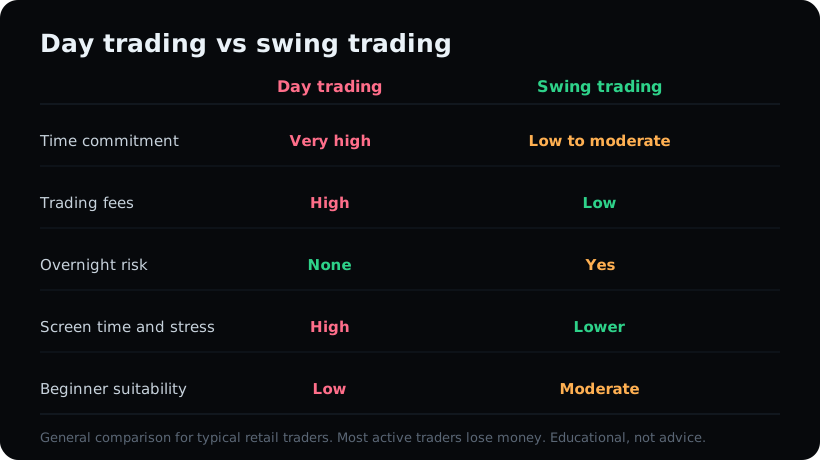
Compare them on what matters
- Time. Day trading needs hours of focused attention during active sessions. Swing trading needs a daily check-in. If you have a job, this alone often decides it.
- Fees. Day traders make many more trades, so spreads and fees quietly compound against them. Swing traders pay a fraction of that. High frequency can turn a winning system into a losing one after costs.
- Overnight risk. Day traders avoid it by closing out daily. Swing traders accept it, and crypto’s 24/7 market means a position can move hard while you sleep. That makes stop-losses essential.
- Stress and emotion. Fast decisions under pressure are where most money is lost. Day trading maximizes that pressure. Swing trading gives you time to think.
- Capital and leverage. Day traders often reach for leverage to make small moves meaningful, which magnifies losses. Swing trades on larger moves can work unleveraged.
Which one fits you
Choose swing trading if you have a job, limited screen time, a low tolerance for minute-to-minute stress, or you are still learning. It is the more forgiving on-ramp and pairs naturally with patience.
Consider day trading only if you can commit serious time, you have capital you can fully afford to lose, you have the temperament for fast losses without tilting, and you are willing to track every trade and treat it like a profession. Go in expecting it to be hard, because the odds say it is.
A third option many overlook: do neither, and accumulate slowly instead. For most people, a boring DCA strategy plus solid risk management beats active trading after fees and stress. And whichever path you pick, your results depend more on discipline than on style. Our piece on crypto trading psychology covers the mental side that decides most outcomes.
The bottom line
Day trading and swing trading are different jobs, not different speeds. Swing trading asks for patience and overnight nerve. Day trading asks for time, capital, and a tolerance for odds that favor the house. Most people are better served by the slower style, or by not actively trading at all. Whatever you choose, size your positions so a wrong call is survivable, and be honest with yourself about which game you are actually equipped to play.
Not financial advice. Nothing above is a recommendation to trade. Most active traders lose money, leverage magnifies losses, and crypto can lose all its value. Do your own research and speak to a qualified advisor. Read the full risk disclaimer.
Frequently asked questions
What is the difference between day trading and swing trading crypto?
Day trading means opening and closing positions within the same day, often holding for minutes to hours and never overnight. Swing trading means holding positions for days to weeks to capture a larger price move. Day trading demands constant screen time and fast decisions, swing trading needs patience and tolerance for overnight risk. They are different jobs, not different difficulty levels of the same job.
Is day trading or swing trading better for beginners?
Swing trading is usually the more realistic starting point. It requires far less screen time, fewer decisions per week, and lower trading costs, and it gives you time to think rather than forcing split-second reactions. Day trading compresses every mistake into a tight window and adds heavy fees from frequent trades. Most beginners who try day trading lose money faster simply because of the pace.
Do most day traders make money?
No, and this is the most important fact in this article. Studies of retail day traders have repeatedly found that the large majority lose money over time, with some research putting the share of consistently profitable day traders in the low single digits. The combination of fees, spreads, leverage, and emotional decisions under time pressure works against you. Assume day trading is hard and rare to win at, because the data says it is.
How much time does swing trading take?
Far less than day trading. A swing trader might check charts once or twice a day, set entries and exits in advance, and let positions develop over days or weeks. That makes it compatible with a full-time job. Day trading, by contrast, is effectively a full-time job itself, demanding hours of focused screen time during active sessions. Time availability alone rules day trading out for many people.
Which style has lower fees and costs?
Swing trading, by a wide margin. Day traders place many more trades, so spreads and trading fees add up fast and quietly erode returns, especially with leverage. A swing trader making a handful of trades a month pays a fraction of that. When you compare strategies, model the fees, because high trade frequency can turn a winning strategy into a losing one after costs.
Can I swing trade crypto with a full-time job?
Yes, that is one of its main advantages. Because positions are held for days or weeks and you plan entries and exits in advance, swing trading does not require watching the screen all day. You do need to accept overnight and weekend risk, since crypto trades 24/7 and can move hard while you sleep. Position sizing and stop-losses matter more for exactly that reason.
Is day trading crypto worth it in 2026?
For the vast majority of people, no, and you should approach it with that assumption. It demands skills, time, capital, and emotional control that most people underestimate, and the odds are stacked against retail traders. If you still want to try, treat it as money you can fully afford to lose, start tiny, and track every trade honestly. This is general information, not advice.
#day trading#swing trading#trading strategy#crypto trading#risk management#guide
Discussion
Loading comments…