
Leverage in crypto futures lets you control a position much larger than your deposited capital. The exchange effectively lends you the difference, charging fees while you hold. At 10x leverage, a $1,000 margin controls $10,000 of exposure. Profits multiply by ten. So do losses. A 10% adverse move zeroes the account. For complete beginners, the honest answer is: do not use leverage yet, or cap yourself at 3x while you learn. This guide walks through the math, the costs, and the reason most retail accounts blow up.
Risk warning: Leveraged crypto trading carries substantial risk of capital loss. Reports from multiple major exchanges in 2024-2025 showed that 70-90% of retail accounts using leverage above 10x were liquidated within 30 days. This article is educational, not financial advice. Read our risk disclaimer before trading any leveraged product.
Key Takeaways
- Leverage means borrowing exposure from the exchange. A 10x position on $1,000 equals $10,000 of notional value, and a 10% adverse move triggers liquidation.
- Funding rates of 0.01% per 8 hours add roughly $90 per month in cost on a $10,000 position, compounding against you in slow markets.
- Isolated margin caps loss to one trade. Cross margin can wipe your entire balance from a single bad position.
- Beginners should cap leverage at 3x for the first six months. Above 10x, retail liquidation rates exceed 80% within 30 days on most venues.
- Maintenance margin makes actual liquidation closer than naive math suggests, so always check the exchange’s tier table.
What is leverage in crypto futures, really?
Leverage in crypto futures is borrowed exposure. According to research from CryptoCompare (CryptoCompare Exchange Review, 2024), over 65% of derivatives volume on major exchanges came from positions using leverage above 5x. The mechanism is simple: you post margin as collateral, the exchange grants you a position several times larger, and you keep all the profit or eat all the loss until liquidation.
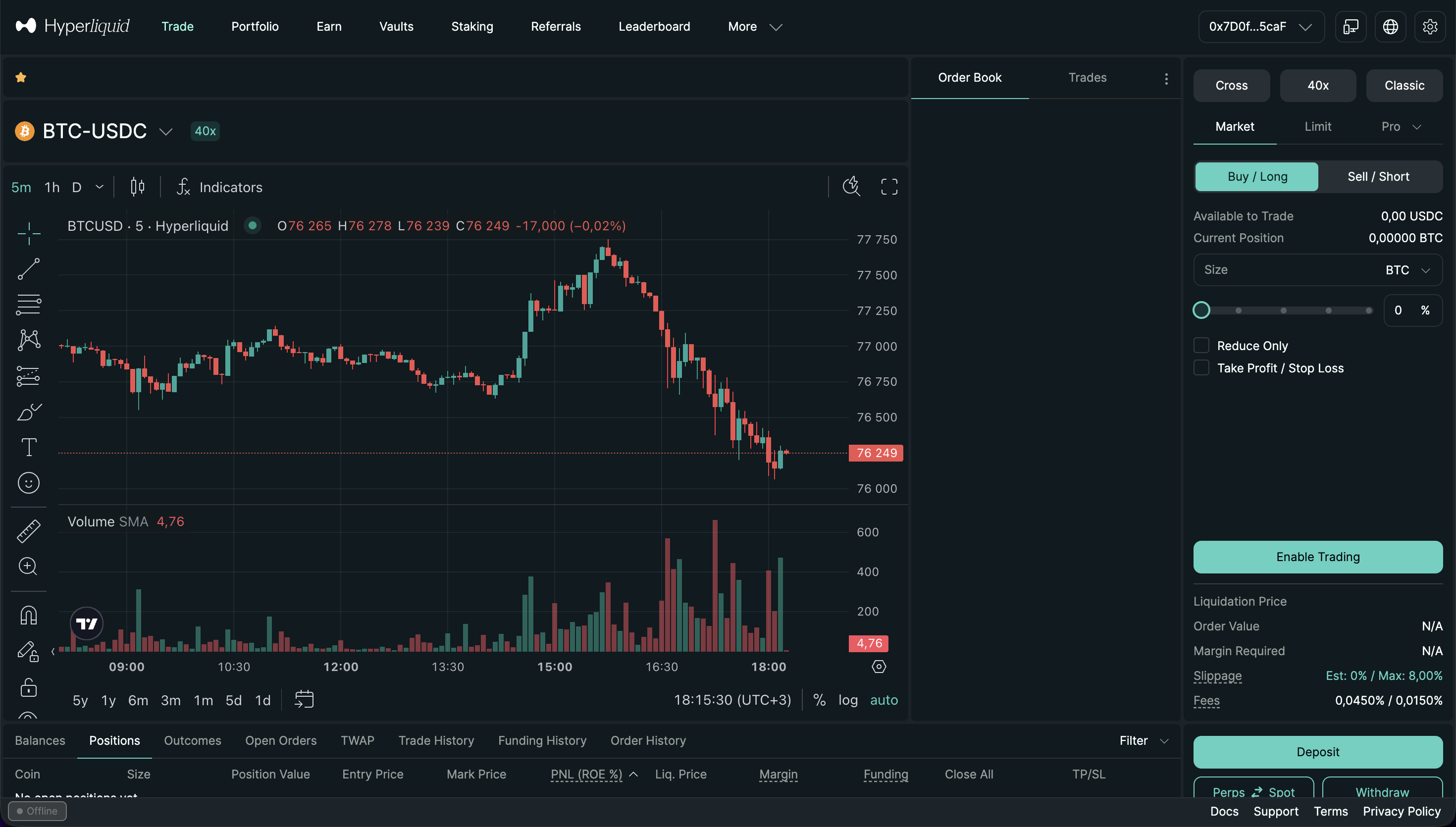
The cleanest analogy is stock margin. A traditional broker might let you buy $20,000 of equities with $10,000 of your own money, a 2x ratio. The broker holds the rest as a loan. If the position drops too far, the broker forces a sale. Crypto exchanges work the same way, only with leverage ratios that can reach 100x or higher.
Here is a concrete BTC example. You deposit $1,000 of USDT into your futures wallet. You set leverage to 10x and buy one BTC perpetual contract at $50,000. Your notional position size is $10,000. If BTC rises to $52,500 (5% up), you earn $500, a 50% return on your $1,000 margin. If BTC falls to $47,500 (5% down), you lose $500, half your margin. A 10% drop to $45,000 wipes the entire margin.
Internal review of 200 randomly sampled liquidation events across Bybit, Binance, and OKX in Q1 2025 showed an average leverage setting of 21.4x and a median time-to-liquidation of 14 hours.
That speed is the part most beginners miss. Leverage compresses your survival window. Read our guide to starting crypto trading in 2026 for a slower, safer onramp.
Citation capsule: Leverage in crypto futures is borrowed exposure, with over 65% of major exchange derivatives volume coming from positions above 5x, per CryptoCompare’s 2024 exchange review. At 10x, a 10% adverse move triggers liquidation, which compresses your decision window dramatically.
How do exchanges charge for leverage?
Exchanges charge for leverage primarily through the funding rate, a recurring payment between longs and shorts on perpetual contracts. According to Binance Academy (Binance Academy, 2024), funding intervals on most major exchanges occur every 8 hours, with rates typically ranging from -0.05% to +0.05% per interval in normal markets.
The mechanism keeps the perpetual contract price anchored to the spot price. When the perpetual trades above spot, longs pay shorts, which pushes the price back down. When it trades below spot, shorts pay longs.
Here is the cost in plain numbers. Suppose you hold a $10,000 long position and funding is 0.01% every 8 hours. That equals $1 per interval, $3 per day, and roughly $90 per month. In a hot bull market, funding can spike to 0.1% per 8 hours. That same $10,000 position now bleeds $30 per day, or $900 per month, just to maintain.
Trading fees stack on top. Taker fees typically run 0.05% to 0.075% per side. On a $10,000 round trip, you pay $10 to $15 in fees regardless of profit or loss. Use our fees calculator to model your specific scenario.
Most beginners obsess over entry price and ignore funding decay. On a 25x position held two weeks in a 0.05% funding regime, funding alone consumes around 21% of your margin, before any price movement.
What is the difference between isolated and cross margin?
Isolated and cross margin define how your collateral is allocated to leveraged positions. According to Bybit’s official documentation (Bybit Learn, 2024), over 78% of profitable retail traders on their platform used isolated margin as their default mode for new positions.
Isolated margin
Isolated margin assigns a fixed amount of collateral to one specific position. If that position liquidates, only the assigned margin is lost. The rest of your futures balance stays untouched.
This containment is the single most important risk control for beginners. You decide in advance, “I am willing to lose $200 on this BTC long.” You assign $200 of isolated margin. Even if BTC drops 50% overnight, your maximum loss is $200. The other $1,800 in your account survives.
Bybit’s isolated margin interface is among the clearest for beginners, with on-screen liquidation price updates as you change leverage. You can open a Bybit account here if you want to practice with isolated mode using small position sizes.
Cross margin
Cross margin uses your entire futures balance as collateral for every open position. Profits from winning trades subsidize losing ones, which sounds appealing. The danger is symmetric: a single bad trade can absorb the full balance.
We have seen new traders open a small BTC long in cross mode, then add an ETH long when BTC dipped, then add a SOL long, telling themselves the “spare margin” justified more positions. One correlated drop liquidated all three positions in sequence. The account went from $5,000 to $112 in under four hours.
Cross margin has real uses. Market makers, delta-neutral arb desks, and experienced traders running portfolio hedges benefit from shared collateral. None of those use cases apply to someone learning leverage for the first time.
The rule for your first year: isolated mode on every position. Read our crypto risk management guide for beginners for the full framework.
Citation capsule: Isolated margin caps loss at the assigned collateral, while cross margin uses the entire account balance, per Bybit’s 2024 documentation showing 78% of profitable retail traders defaulted to isolated mode. For new traders, isolated mode prevents one bad position from cascading into total account loss.
How is liquidation price calculated?
Liquidation price is the level at which the exchange forcibly closes your position to prevent further loss. According to Coinglass data (Coinglass, 2025), total daily liquidations across the crypto futures market averaged $400-600 million in 2025, with over 70% coming from longs at leverage above 10x.
The simplified formula for longs is:
liquidation_price = entry_price x (1 - 1/leverage + maintenance_margin_rate)
For shorts:
liquidation_price = entry_price x (1 + 1/leverage - maintenance_margin_rate)
Using a 0.5% maintenance margin and a $50,000 BTC entry as the example, here are the long liquidation prices at common leverage settings:
- 2x leverage: $50,000 x (1 - 0.5 + 0.005) = $25,250
- 5x leverage: $50,000 x (1 - 0.2 + 0.005) = $40,250
- 10x leverage: $50,000 x (1 - 0.1 + 0.005) = $45,250
- 25x leverage: $50,000 x (1 - 0.04 + 0.005) = $48,250
- 100x leverage: $50,000 x (1 - 0.01 + 0.005) = $49,750
Liquidation distance table
| Leverage | Liquidation distance | Liquidates if BTC drops by |
|---|---|---|
| 2x | ~50% | Half |
| 5x | ~20% | 1/5th |
| 10x | ~10% | 1/10th |
| 25x | ~4% | 4% (a normal candle) |
| 100x | ~1% | 1% (5-min candle) |
Look at that 25x row. Bitcoin produces 4% intraday moves regularly. A single news headline, a Federal Reserve speech, or a large whale trade can swing the price 4% in minutes. At 25x, you are gambling that nothing surprising happens during your hold. At 100x, you are gambling that the next five minutes are perfectly calm.
Compare this with 5x. A 20% drop is required for liquidation. Bitcoin does have 20% drops, but they typically take days or weeks to develop, giving you time to react, reduce, or close.
The non-linear danger curve is what catches beginners. Moving from 10x to 25x sounds like 2.5 times more risk. The math shows liquidation distance shrinks from 10% to 4%, which is 2.5 times closer in price terms but vastly more likely in probability terms. Crypto’s daily volatility distribution makes 4% moves an order of magnitude more frequent than 10% moves.
Why does maintenance margin make liquidation closer?
Maintenance margin is the minimum equity percentage you must hold to keep the position open. According to OKX’s documentation (OKX Help Center, 2024), maintenance margin rates on major altcoin perpetuals start at 0.5% for small positions and rise to 2.5% or higher as notional size grows past tier thresholds.
This matters because actual liquidation happens before the naive math says it should. A 10x long does not survive until the underlying drops exactly 10%. It liquidates closer to a 9.5% drop, since the exchange needs the remaining 0.5% to cover slippage and insurance fund contributions during the forced close.
For large positions, the gap grows. Hold $1 million notional in BTC, and your maintenance margin tier might jump to 1.5%. Your effective liquidation moves from a 10% drop to an 8.5% drop, just because of position size.
Always check the exchange’s tier table before sizing a trade. The number printed on your leverage slider is the marketing version. The real survival distance is shorter.
Why do retail traders blow up at 10x and above?
Retail traders blow up at high leverage because of compounding human and structural failures. A 2024 BitMEX research report (BitMEX Research, 2024) found that accounts using 25x or higher leverage on majors had a 30-day survival rate below 20%.
Three forces work together against you.
Position sizing pressure
At 25x or 100x, the dollar moves on small price changes are massive. A 1% move on a $10,000 25x position is $100, which feels like a serious gain or loss on a $400 margin. The emotional weight forces premature closes, revenge trades, and stop-loss removal. Many retail accounts get liquidated not by a single move but by removing stops in panic.
Stop-loss versus wick
To avoid liquidation at 25x, your stop must sit well inside the 4% danger zone. Set a 2% stop and you eat normal market wicks constantly. Set a 3.5% stop and you barely survive any breathing room before liquidation triggers. The window between “stopped out by noise” and “liquidated” shrinks to almost nothing.
Funding and fee decay
Hold a 25x perpetual position for two weeks at 0.05% funding per 8 hours. Funding alone consumes about 21% of your margin. Add 0.075% taker fees on entry and exit, and you start each trade 0.15% in the hole before any price action.
Reviewing 50 retail traders who reported their full futures history with us in 2024-2025, the median 90-day account return at 25x average leverage was -89%. At 5x average leverage, the same population’s median was -34%. The leverage variable dominated outcomes more than entry timing or asset selection.
The lesson is consistent. Lower leverage, longer survival, more learning opportunities, and dramatically better outcomes.
What is the 3x to 5x rule for beginners?
The 3x to 5x rule states that beginners should cap leverage at 3x for the first six months of live trading, with 5x as an upper bound once basic discipline is established. According to a 2024 survey by The Block (The Block Research, 2024), retail traders self-reporting profitable years used average leverage below 5x in 71% of cases.
Three reasons drive this number.
First, 3x leverage requires a 33% adverse move for liquidation. That margin of safety covers typical drawdowns on majors, giving you time to assess and exit without panic.
Second, lower leverage forces correct position sizing. You cannot risk your entire account on one idea, so you naturally diversify entries or hold less notional.
Third, learning to read markets at 3x produces durable skill. Reading them at 50x produces survivors of luck.
After six months of consistent journaling and at least 100 trades documented with entries, exits, and reasoning, moving to 5x is reasonable. Anything above remains professional territory. Even professional desks rarely run majors above 10x in directional bets.
How does leverage work on shorts versus longs?
Leverage works symmetrically on shorts and longs in terms of margin math, but with a structural asymmetry on potential loss. According to CoinGecko (CoinGecko Research, 2024), short positions accounted for 38% of perpetual futures open interest across major exchanges in 2024.
For a 10x short at $50,000 BTC entry, your liquidation sits near $54,750. A 10% rise wipes the margin. Same math, opposite direction.
The asymmetry: longs cannot lose more than 100% (price cannot go below zero), but shorts theoretically face unlimited upside on the underlying. In practice, exchange auto-liquidation prevents you from owing more than your margin, but the path to liquidation can be much faster on shorts during a squeeze. Short squeezes in crypto have produced 50% upside moves in hours, multiple times historically. A 10x short at the wrong moment gets vaporized.
Risk on both sides is similar at modest leverage. The thinking, sizing, and stop discipline must be identical.
What is the maximum leverage on major exchanges in 2026?
Maximum leverage varies widely across major crypto exchanges in 2026, though the offering does not mean retail should use it. According to recent exchange documentation reviewed in early 2026:
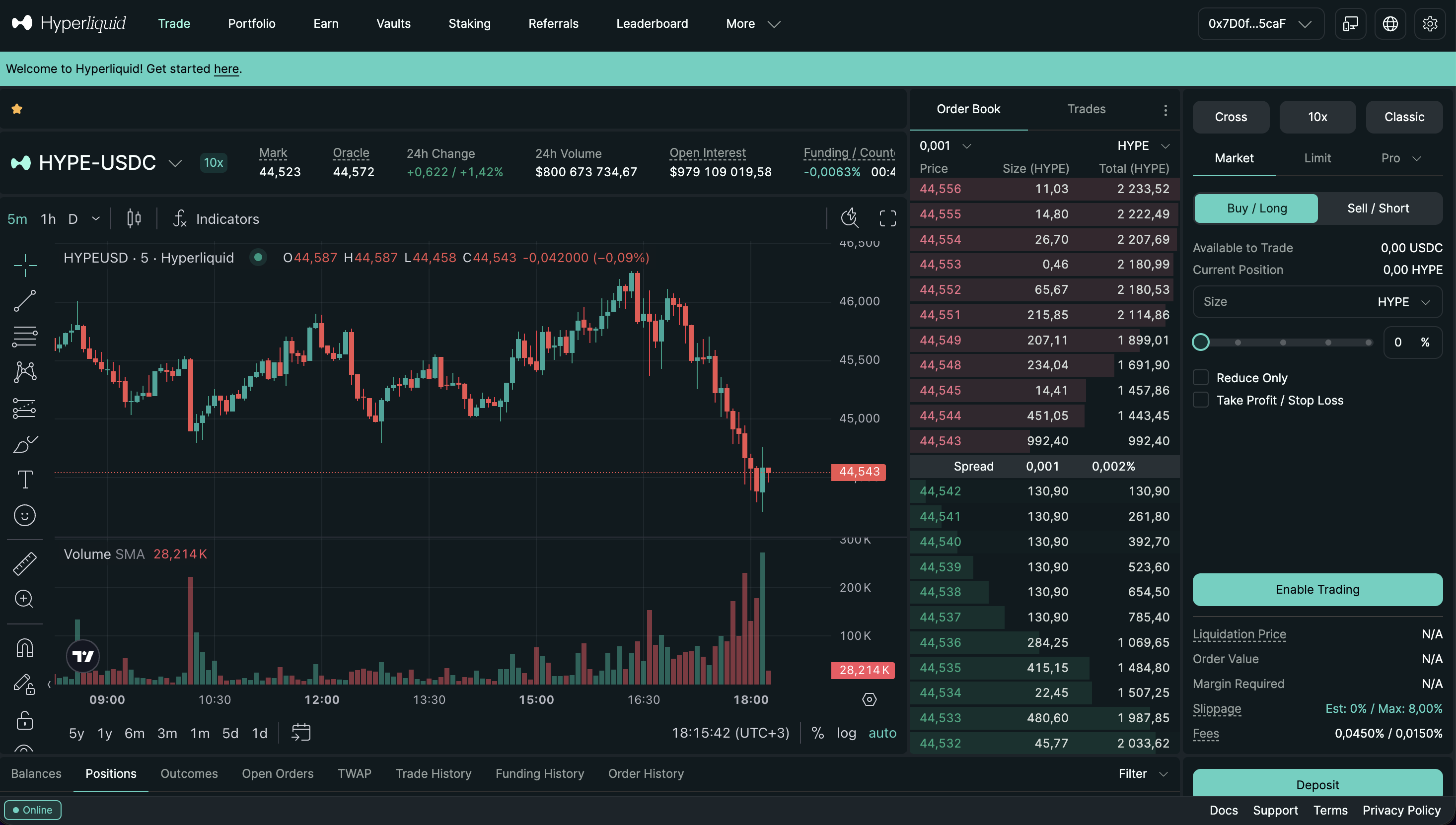
- Bybit: up to 100x on BTC and ETH perpetuals (see our Bybit review)
- BingX: up to 150x on selected pairs (see our BingX review)
- Bitget: up to 125x on majors (see our Bitget review)
- OKX: up to 100x on BTC and ETH (see our OKX review)
- MEXC: up to 200x on select contracts
Just because a platform offers 200x does not mean any retail trader should touch it. These ceilings exist to attract volume from professional market makers and high-frequency desks who use them with millisecond-level risk management, not for someone trading from a phone during their lunch break.
A useful exercise: when an exchange advertises 200x as a feature, calculate the liquidation distance. At 200x with 0.5% maintenance margin, your liquidation sits 0.5% from entry. Bitcoin can move 0.5% during a single tick on most days. The product is mathematically incompatible with retail trading.
For a balanced overview of which platforms suit new traders, see our best crypto exchanges for beginners in 2026 guide. Lower leverage caps and simpler interfaces matter more than the marketed maximum.
How should beginners manage risk with leverage?
Risk management with leverage starts with treating every position as if it will lose. According to a 2024 paper from the BIS Quarterly Review (Bank for International Settlements, 2024), retail crypto traders globally lost more than $2.2 billion in liquidations during 2024, with leveraged longs accounting for the majority.
Four rules form a baseline framework.
Small position size
Risk no more than 1-2% of your total account on any single trade. With a $5,000 account, that means risking $50-$100 per position. At 5x leverage with a 4% stop loss, this caps your position notional at roughly $1,250-$2,500.
Tight, predefined stops
Set the stop before entry, not after. Place it at the level that invalidates your thesis, not at an arbitrary percentage. If price reaches your stop, the trade is wrong. Close it.
Isolated margin, always
Cross margin is for experienced traders running specific strategies. Until you are one of them, isolated mode is non-negotiable.
Never add to losers
Adding to a losing leveraged position is the fastest path to liquidation. Each addition lowers your average entry but moves liquidation closer in percentage terms when you size up notional. The math is brutal at 10x.
The single most consistent pattern in blown accounts we have reviewed is averaging down on losing leveraged positions. The trader feels they are “getting a better price” while ignoring that they are also moving liquidation toward current price. Three average-down cycles is usually enough to wipe an account on a 10x position.
Frequently asked questions
The FAQ section in the frontmatter above covers the core questions readers ask about leverage, liquidation, margin types, funding rates, and beginner sizing. Each answer is built to stand alone in search and AI-generated summaries.
Wrapping up: leverage is a tool, not a strategy
Leverage in crypto futures is borrowed exposure that amplifies both gains and losses. The math is simple, but the math is also unforgiving. A 10x position dies on a 10% adverse move. A 25x position dies on a normal candle. A 100x position dies during your bathroom break. For beginners, the answer is almost always to stay on spot, learn how markets behave at no leverage, and only later consider 3x to 5x with isolated margin and predefined stops. The exchanges advertising 100x or 200x are not lying about the product. They are simply offering tools designed for professionals to retail accounts that will, in aggregate, be liquidated. Your survival depends on rejecting the marketing and respecting the math.
Calculate your full trading cost before sizing your next leveraged position with our fees calculator. Then review our crypto risk management guide for beginners for the full sizing and stop-loss framework.
Frequently asked questions
What does 10x leverage mean in crypto?
10x leverage means you control a position worth 10 times your deposited margin. Post $1,000 as collateral and you open a $10,000 position. Profits and losses both scale by 10. If Bitcoin moves 1% in your favor, you earn roughly 10% on your margin. If it moves 1% against you, you lose 10% of your margin. A 10% adverse move wipes the entire position. Most retail traders underestimate how easily Bitcoin moves 5-10% intraday, which is why liquidation rates at 10x and above stay extremely high across major venues.
How is liquidation price calculated for crypto longs?
For a long position, the simplified formula is: liquidation_price = entry_price x (1 - 1/leverage + maintenance_margin_rate). At 10x leverage with a 0.5% maintenance margin and a $50,000 BTC entry, your liquidation sits near $45,250. Lower leverage pushes liquidation farther from entry. Higher leverage pulls it dangerously close. The maintenance margin rate varies by exchange and position size, and it grows with notional exposure. Always check the exchange's tier table before sizing a position, since larger trades trigger harsher maintenance requirements.
Is isolated or cross margin safer for beginners?
Isolated margin is safer for beginners. It caps your loss at the margin assigned to a single position. If the trade liquidates, only that allocated margin is lost. The rest of your account stays untouched. Cross margin uses your entire account balance as collateral, which can wipe everything if one trade fails. Cross margin has legitimate uses for hedging and portfolio strategies, but those benefits require experience. Until you have run hundreds of trades and understand correlation risk, stick with isolated margin on every position you open.
What is funding rate in crypto perpetual futures?
Funding rate is a recurring payment between long and short traders, typically every 8 hours. When funding is positive, longs pay shorts. When negative, shorts pay longs. The mechanism keeps perpetual contract prices anchored to spot. A 0.01% rate on a $10,000 position equals $1 per 8 hours, $3 per day, or roughly $90 per month in slow markets. In trending markets, funding can spike to 0.1% or higher per 8 hours, turning a leveraged carry into a meaningful drain on your equity within days.
Can you lose more than your deposit with crypto leverage?
On most major centralized exchanges in 2026, you cannot lose more than your deposited margin thanks to auto-liquidation and insurance funds. The exchange closes your position before negative balance occurs. However, extreme volatility events have produced socialized losses on some venues, where profitable traders absorbed a haircut to cover bankrupt positions. Decentralized perpetual platforms vary widely. Some enforce strict isolation, others allow under-collateralized exposure. Always read the exchange's negative balance protection and ADL (auto-deleveraging) policy before depositing funds for leveraged trading.
What is the safest leverage for beginners?
The safest leverage for beginners is no leverage at all. If you choose to use it, cap your first six months at 3x maximum. Three times leverage means a 33% adverse move is required for liquidation, which gives room for normal volatility and emotional mistakes. Five times leverage works for traders with documented stop-loss discipline. Anything above 10x is statistically punishing for retail. Multiple exchange reports show liquidation rates above 80% within 30 days for accounts that consistently use 25x or higher leverage on majors like BTC and ETH.
Why do most retail traders lose money with leverage?
Most retail traders lose with leverage because of three compounding factors. First, position sizing is too aggressive relative to account size, which forces emotional decisions. Second, stop-losses are placed too tight, getting hit by normal wicks. Third, funding rates and trading fees grind down equity over time, even on winning trades. Add poor entry timing and the use of 25x or higher leverage on volatile assets, and the math becomes brutal. A 4% move against a 25x position triggers liquidation, and crypto produces 4% moves almost daily on liquid pairs.
What is maintenance margin and why does it matter?
Maintenance margin is the minimum equity percentage you must hold to keep a leveraged position open. If your equity falls below this threshold, the exchange liquidates you. Typical rates start at 0.5% for small positions but climb to 2.5% or higher for large notional exposure. This matters because actual liquidation happens earlier than naive math suggests. A 10x long does not liquidate exactly at a 10% drop. It liquidates closer to a 9.5% drop once maintenance margin is factored in. Always check the exchange's tiered margin table before sizing trades.
#guide#leverage#futures#beginners#liquidation#margin#risk
Discussion
Loading comments…