
Most people trade crypto by placing an order on an exchange and letting it fill against the order book. That works well until the order gets big. Try to buy a few million dollars of a coin on the open market and you push the price against yourself and tip off everyone watching. OTC trading exists to solve exactly that. In plain terms, OTC, or over-the-counter, crypto trading is buying or selling directly between two parties, usually through a desk, instead of on the public order book. This guide explains what OTC is, how it differs from a normal exchange trade, who uses it, and where to start.
Not financial advice. This is general education, not a recommendation to trade any asset or use any specific service. Trading carries risk and you can lose money. Read our risk disclaimer and do your own research first.
Key takeaways
- OTC trading fills an order directly between two parties, off the public order book, usually through a desk.
- It exists for large trades, where a single agreed price avoids slippage and keeps the trade private.
- Users are mostly institutions, funds, miners, treasuries and high-net-worth individuals, not everyday retail.
- Main risks are counterparty and settlement risk, so a reputable, compliant desk matters.
- For normal-sized trades the order book is cheaper and simpler. OTC only pays off at size.
What OTC crypto trading is
Over-the-counter simply means a trade arranged directly between a buyer and a seller, rather than matched on a public exchange. In crypto, an OTC desk sits in the middle: it sources liquidity, quotes a single price for the whole amount, and settles the trade privately. You agree the price up front, so you know exactly what you are getting before anything executes. The term comes from traditional finance, where plenty of assets trade over the counter rather than on an exchange.
How OTC differs from the order book
The clearest way to see the difference is to picture a large order hitting a public book versus going through a desk.
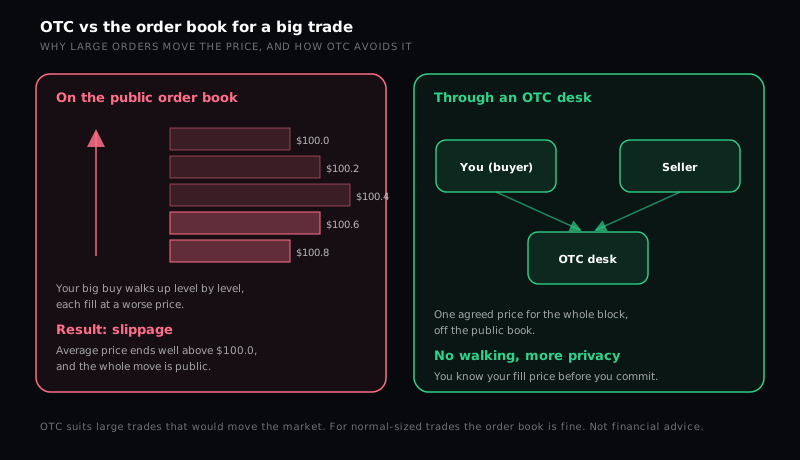
On the order book, a large market order eats through price levels one by one. Each successive fill is at a worse price, so your average is well away from where you started, and the move is visible to every trader and bot. That gap between the price you expected and the price you got is slippage. Through an OTC desk, you get one quote for the entire block. There is no walking through levels, no public footprint, and you know your fill price before you commit. We break down trading costs more generally in BingX vs Bybit vs KuCoin fees.
Who uses OTC desks
OTC is built for size. The typical users are institutions and funds entering or exiting positions, miners selling newly mined coins, companies managing a crypto treasury, and high-net-worth individuals. They all share one problem: their order is large enough to move the public market, so trading it in the open would cost them. If your trade is small enough to fill on the order book without noticeable slippage, you are not the target user, and that is completely fine.
How an OTC trade works
The flow is usually simple. You request a quote for a specific amount, the desk responds with a firm price (often valid for a short window), you accept, and then the two sides settle: you send funds, the desk delivers the asset, with the desk handling escrow and settlement so neither side has to trust the other blindly. Good desks run identity checks and put settlement terms in writing.
Pros and cons
- Pro: no order-book slippage. One price for the whole block, agreed before execution.
- Pro: privacy. The trade does not show up on the public book as it happens.
- Pro: high-touch service. A desk can handle unusual sizes and assets.
- Con: high minimums. Often tens of thousands of dollars or more, so it is not for small trades.
- Con: counterparty and settlement risk. You rely on the desk delivering, which is why reputation matters.
- Con: less transparency. You trust the desk for a fair quote rather than reading a public book.
Where to trade OTC
Several mainstream exchanges run an OTC desk alongside their normal markets. KuCoin, for example, offers an OTC service for larger trades, and you can read more in our KuCoin review. For regular-sized trading you do not need a desk at all: the spot market on an exchange handles it with minimal slippage, and you can trade on BingX or read our BingX review. If you fund with stablecoins, see is USDT safe. Whichever route you take, confirm the live terms, minimums and supported assets first.
Bottom line
OTC crypto trading is a way to move large amounts at a single agreed price, off the public order book, through a desk that handles the quote and settlement. Its whole reason to exist is avoiding the slippage and visibility that a big order would trigger on the open market. For institutions, miners, treasuries and large holders it is a genuinely useful tool. For everyday traders, the normal order book is cheaper and simpler, and that is exactly what it is there for.
This article is general information, not financial or legal advice. OTC carries counterparty and settlement risk, and crypto rules vary by country. Read our risk disclaimer, use reputable and compliant services, and never trade money you cannot afford to lose.
Frequently asked questions
What is OTC crypto trading?
OTC, or over-the-counter, crypto trading is a way to buy or sell crypto directly between two parties, usually through a desk that matches them, instead of placing the order on a public exchange order book. It is mainly used for large trades, because a single agreed price for the whole block avoids the slippage and visibility that a big order would cause on the open market.
How is OTC different from trading on an exchange?
On an exchange, your order hits a public order book and fills against whatever prices are available, so a large order walks up or down through levels and the move is visible. An OTC desk instead quotes one price for the entire block, settles it privately off the book, and does not push the visible market. For normal-sized trades the order book is cheaper and simpler. OTC is for size.
Who uses OTC desks?
Mostly large players: institutions, funds, miners selling output, companies managing a crypto treasury, and high-net-worth individuals. They share a common problem, which is moving an amount large enough to disturb the public market, and OTC lets them trade it at a known price without broadcasting their hand. Most retail traders never need it.
Is OTC crypto trading legal?
OTC trading itself is a standard, legitimate way to trade that exists in every major market, not just crypto. What matters is that the desk you use is reputable and compliant, applies proper identity checks, and operates in your jurisdiction. As always, the legality of crypto activity depends on your country, so check local rules. This is general information, not legal or financial advice.
What is the minimum for an OTC trade?
It varies by desk, but minimums are typically large, often in the tens of thousands of dollars or more, because the whole point is handling size that would move the order book. That is why OTC is not aimed at everyday retail trades. If your order is small enough to fill on the order book without noticeable slippage, you do not need OTC.
What are the risks of OTC trading?
The main ones are counterparty and settlement risk, the chance the other side does not deliver, which is why a trusted desk that handles escrow and settlement matters. There is also less price transparency than a public book, so you rely on the desk for a fair quote. Stick to established, regulated desks, confirm settlement terms in writing, and never skip the identity checks.
Where can I do OTC crypto trades?
Several mainstream exchanges run OTC desks. KuCoin, for example, offers an OTC service for larger trades alongside its normal markets. For regular-sized trading you do not need a desk at all, you can simply use the spot market on an exchange like BingX. Check the live OTC terms, minimums and supported assets before you commit. This is not financial advice.
#OTC#over-the-counter#trading#liquidity#crypto#2026
Discussion
Loading comments…