
If you hold crypto, sooner or later you hit the question of where to keep it safely. A cold wallet is the answer most long-term holders land on. In plain terms, a cold wallet is a crypto wallet that keeps your private keys completely offline, so an online attacker has nothing to reach. This guide explains what a cold wallet is, how cold storage compares to a hot wallet, the main types, and when self-custody actually beats leaving coins on an exchange.
Not financial advice. This is general education about security and self-custody, not a recommendation to buy any asset or product. You are responsible for your own keys and backups. Read our risk disclaimer and do your own research first.
Key takeaways
- A cold wallet keeps your private keys offline, so they are not exposed to online attackers.
- The common form is a hardware wallet, a small device that signs transactions offline.
- Cold storage suits long-term holding and larger amounts. A hot wallet suits active trading and smaller amounts.
- Your seed phrase is the real backup. Lose the device and the phrase, and the funds are gone.
- Most people buy on an exchange, then withdraw to cold storage for what they are not actively using.
What a cold wallet is
Owning crypto really means controlling a private key, the secret that authorizes spending. Whoever holds the key controls the coins. A cold wallet keeps that key offline at all times, which is why it is also called cold storage. Because the key never touches an internet-connected device, a remote attacker cannot phish it or pull it off a hacked computer. When you want to move funds, the cold wallet signs the transaction offline and only the signed result goes online.
This is the opposite of a hot wallet, which keeps the key on a connected device: an exchange account, a mobile app, or a browser extension. Hot wallets are convenient and fine for everyday use, but being online makes them a bigger target.
Hot wallet vs cold wallet
The choice is really about a trade-off between convenience and security, and most people end up using both.
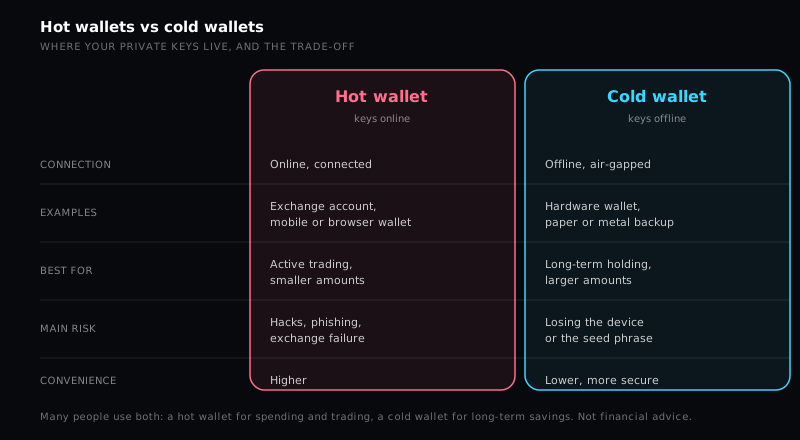
A hot wallet is like the cash in your pocket: easy to spend, but you would not carry your life savings that way. A cold wallet is like a safe: less convenient to reach, but far harder for someone to take. A common setup is to keep a small, active balance hot for trading and spending, and the rest in cold storage.
Types of cold storage
- Hardware wallet. A small dedicated device (for example Ledger or Trezor) that stores keys and signs transactions offline. This is the most popular and practical option for most people.
- Paper or metal backup. Your keys or seed phrase written down and kept offline. Metal plates survive fire and water better than paper. This is simple but easy to damage or lose if you are not careful.
- Air-gapped device. An old phone or computer kept permanently offline and used only to sign. Powerful but more advanced to set up safely.
When you actually need one
Match the storage to the stakes. If you are holding a small amount you actively trade, a reputable exchange or a hot wallet is usually fine and much simpler. A cold wallet earns its place once you are holding an amount you would genuinely be upset to lose, or holding for the long term and not touching it often. There is no shame in starting on an exchange and moving to cold storage as your holdings grow.
How to use a cold wallet safely
- Guard the seed phrase. Those recovery words are the real backup. Write them down, store them offline in more than one place, and never type them into a website or share them with anyone.
- Buy hardware from the official maker. Avoid second-hand or marketplace devices that could be tampered with.
- Send a test first. When moving funds, send a tiny test amount and confirm it arrives before sending the rest.
- Double-check addresses. Malware can swap a copied address. Verify the first and last characters on the device screen.
Cold storage and exchanges
Cold storage and exchanges are not rivals, they do different jobs. The exchange is your on-ramp and trading venue: it is where you buy, sell and convert. You can trade on BingX or compare options in our BingX review and KuCoin review. The cold wallet is where you park what you are not actively using. One nuance worth knowing: coins you are staking or holding as tokenized assets usually sit with a platform, not in your own cold storage, which is a different risk profile. If you fund with stablecoins, see is USDT safe.
Bottom line
A cold wallet keeps your private keys offline, which makes it the safest place to hold crypto you are not actively trading. It trades some convenience for a lot of security, and it puts the responsibility for backups squarely on you. For most people the sensible pattern is simple: buy and trade on a reputable exchange, keep a small active balance hot, and move long-term holdings into cold storage, with the seed phrase backed up offline and kept private.
This article is general information about security, not financial advice. You alone are responsible for your keys and backups, and mistakes can be irreversible. Read our risk disclaimer, do your own research, and never risk money you cannot afford to lose.
Frequently asked questions
What is a cold wallet in crypto?
A cold wallet is a crypto wallet that keeps your private keys completely offline, so they never touch an internet-connected device. Because the keys are air-gapped, an online attacker cannot reach them. The most common form is a hardware wallet, a small device that signs transactions offline. It is the opposite of a hot wallet, which stays connected and is more convenient but more exposed.
What is the difference between a hot wallet and a cold wallet?
A hot wallet keeps keys online, such as an exchange account or a mobile app. It is convenient for trading and spending but more exposed to hacks and phishing. A cold wallet keeps keys offline, such as a hardware or paper wallet. It is more secure and suited to long-term holding, but less convenient day to day. Many people use both: hot for activity, cold for savings.
Is a cold wallet safer than an exchange?
For long-term holding, generally yes, because you hold the keys yourself and they stay offline, so you are not exposed to an exchange hack or freeze. The trade-off is responsibility: if you lose the device and the seed phrase, no one can recover your funds. An exchange is more convenient and can help with access recovery, but you are trusting it to stay solvent and secure.
What happens if I lose my cold wallet device?
You can usually recover your funds using the seed phrase, the list of recovery words you wrote down when you set the wallet up. You import that phrase into a new device and your funds reappear. This is why the seed phrase matters more than the device itself. If you lose both the device and the phrase, the funds are gone for good, since no company holds a copy.
Do I need a cold wallet for small amounts of crypto?
Not necessarily. For small amounts you actively trade or spend, a reputable exchange or a hot wallet is usually fine and far simpler. A cold wallet makes the most sense once you are holding an amount you would be upset to lose, or holding for the long term. Match the storage to the stakes rather than buying hardware for pocket change.
Can a cold wallet be hacked?
Remote hacking is very hard because the keys never go online, which is the whole point. The realistic risks are physical: someone stealing the device and the PIN, you being tricked into revealing your seed phrase, or buying a tampered device from an untrusted seller. Buy hardware from the official maker, never type your seed phrase into a website, and keep the phrase private.
Where do I buy crypto before moving it to cold storage?
Most people buy on a mainstream exchange such as BingX or KuCoin, then withdraw to their cold wallet for long-term storage. The exchange is the on-ramp and the place you trade, while the cold wallet is where you keep what you are not actively using. Always send a tiny test amount first and double-check the address. This is general information, not financial advice.
#cold wallet#cold storage#self-custody#security#crypto#2026
Discussion
Loading comments…